
Cambodia Travel Guide
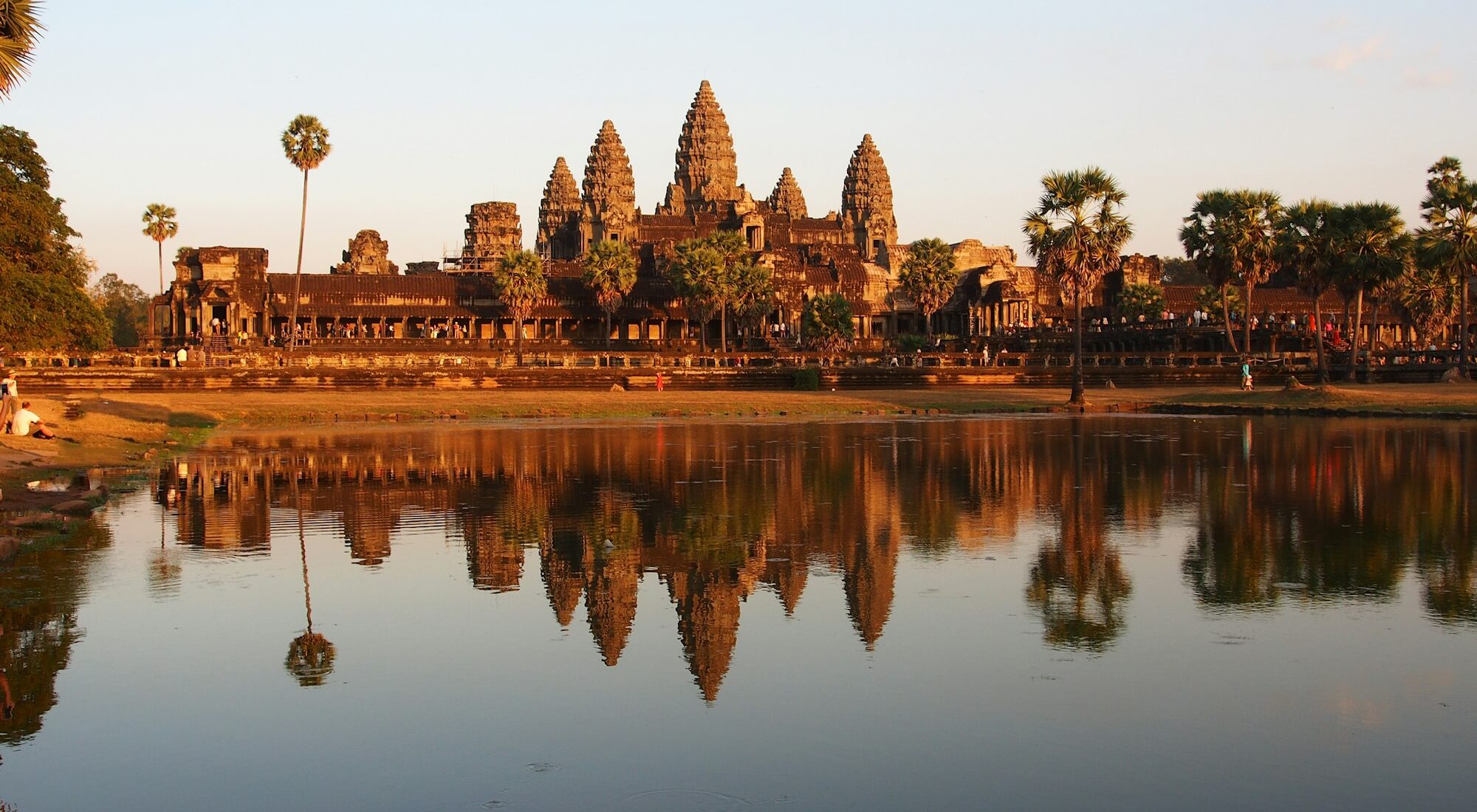
Cambodia is best known for the temples of Angkor, but the country extends far beyond its most celebrated monuments. A journey might combine the energy and history of Phnom Penh with rural villages, forested mountains, quiet stretches of the Mekong, characterful provincial towns and the southern coastline.
Travelling through Cambodia reveals a country shaped by both the achievements of the Khmer Empire and the events of its more recent past. Ancient temples, contemporary arts, traditional crafts and local food all contribute to a deeper understanding of modern Cambodia.
The principal destinations can be combined relatively easily, but a good journey should not be rushed. Angkor alone deserves several days, while the more remote parts of the country require realistic allowances for road travel. With careful planning, Cambodia can offer considerably more variety than many first-time visitors expect.
Why Visit Cambodia?
The temples of Angkor provide a compelling reason to visit Cambodia, but they are most rewarding when experienced as part of the country’s wider story. Beyond Angkor Wat, hundreds of monuments reveal the changing beliefs, ambitions and architectural achievements of the Khmer Empire.
Cambodia’s more recent history is equally important. Phnom Penh provides insight into the difficult events of the 20th century, but also introduces the creativity shaping the country’s future. Galleries, restaurants, social enterprises and a growing community of designers and artists present a more contemporary side of Cambodia.
Outside the cities, the rhythm changes quickly. Roads pass through rice fields, villages and agricultural landscapes, while the Mekong supports communities whose lives remain closely connected to the river. The southern towns of Kampot and Kep can be combined with countryside, national parks and islands.
Cambodia works particularly well for travellers interested in history and culture, but it can also incorporate cycling, walking, wildlife, food, river journeys and time on the coast.
When to Visit Cambodia
Cambodia has a tropical climate with warm temperatures throughout the year.
The generally drier period between November and March is the most popular time to travel. Temperatures are usually more comfortable, particularly in the mornings and evenings, making this a favourable season for temple visits, cycling and outdoor exploration.
April and May are normally the hottest months. Journeys remain possible, but the timing of each day becomes more important. Early starts, a break during the warmest hours and a return to exploring later in the afternoon usually create a more comfortable experience.
The green season generally runs from May to October. Rain often arrives in short, heavy showers rather than continuing throughout the day, and the countryside becomes noticeably greener. This can be an attractive period around the temples and rural landscapes, with dramatic skies and fewer visitors.
Water levels influence experiences on Tonle Sap and parts of the Mekong. Boat routes and the suitability of particular communities may therefore change with the season.
How Long Should You Spend in Cambodia?
A shorter journey of approximately five to seven days can combine Siem Reap and the temples of Angkor with Phnom Penh. This provides a strong introduction, although the pace will be fairly active.
With eight to ten days, it becomes possible to slow the journey and include another region such as Battambang, the Mekong or the southern towns of Kampot and Kep.
Twelve to fourteen days allows Cambodia to be explored in greater depth. A longer journey might incorporate remote Angkorian temples, rural communities, conservation areas, the northeastern provinces or time on the coast.
Cambodia can also form part of a wider regional itinerary, but it should not be reduced to a brief stop at Angkor. Even when combined with another country, allowing time for Phnom Penh or rural Cambodia creates a more complete understanding of the destination.
Places to Visit in Cambodia
Phnom Penh
Cambodia’s capital stands at the meeting point of the Mekong, Tonle Sap and Bassac rivers. The city combines royal and religious architecture with busy markets, local neighbourhoods, riverside life and an evolving collection of restaurants and creative spaces.
The Royal Palace and Silver Pagoda introduce Cambodia’s royal heritage, while the National Museum contains one of the world’s most important collections of Khmer art. Together, these places provide valuable context before or after visiting Angkor.
Sites connected to the Khmer Rouge period are difficult but important. They should be approached sensitively and not treated as routine sightseeing. Visiting both Tuol Sleng and the Killing Fields on the same day can be emotionally demanding, so the day should be paced carefully and balanced with a broader view of Phnom Penh.
Two or three nights usually allows enough time to understand the city beyond its principal landmarks.
Siem Reap and Angkor
Siem Reap is the gateway to Angkor and the natural centre of most first journeys through Cambodia.
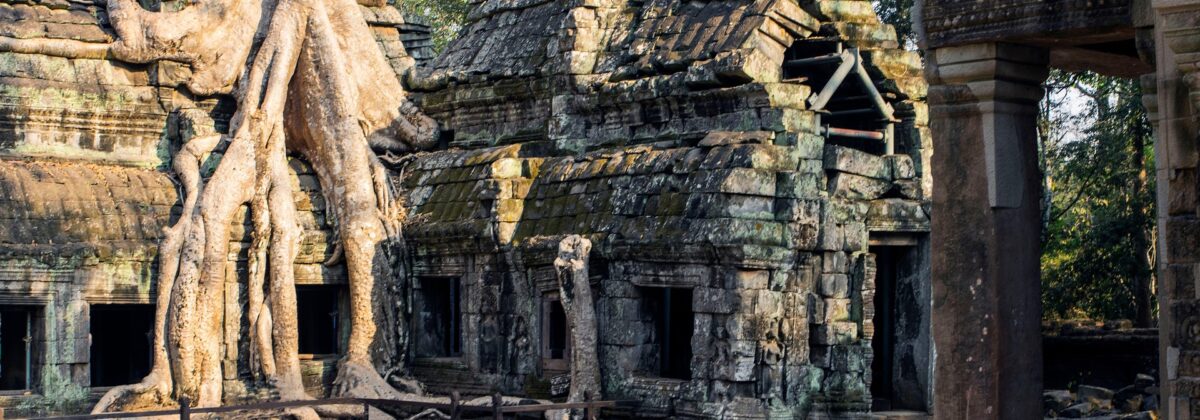
Angkor Wat may be the best-known monument, but the wider archaeological landscape contains an extraordinary range of temples. These include the monumental remains of Angkor Thom, the tree-covered ruins of Ta Prohm and smaller sites reached through forests and rural communities.
Trying to visit too many temples in a single day can quickly become tiring. The order, timing and selection matter more than the number included. Early mornings can provide cooler conditions, while returning to the hotel during the hottest part of the day often makes it possible to explore again later with renewed interest.
Sunrise at Angkor Wat can be memorable, but it is not essential for every visitor. Quieter moments elsewhere in the temple complex may prove equally rewarding. A knowledgeable guide can choose locations and timings according to individual interests rather than following one fixed circuit.
At least three nights is advisable. Four or five nights creates time for the countryside, food, crafts and contemporary Cambodian culture as well as the temples.
Battambang
Battambang is a relaxed riverside city surrounded by some of Cambodia’s most productive countryside. Its centre retains colonial-era buildings, traditional shops, cafes and galleries, while nearby villages are associated with rice production, fruit growing and local crafts.
The surrounding landscape can be explored by bicycle, tuk-tuk or private vehicle. Quiet roads and village tracks provide an enjoyable introduction to rural Cambodian life without requiring a demanding level of activity.
Battambang also has a respected performing arts scene. An evening performance can provide insight into the role of the arts in Cambodia’s cultural recovery while supporting the development of young Cambodian performers.
Two nights usually provides enough time to explore the city and surrounding countryside. Battambang can also create a more gradual overland journey between Phnom Penh and Siem Reap.
Tonle Sap Lake
Tonle Sap is Southeast Asia’s largest freshwater lake and plays a central role in Cambodia’s environment, economy and food supply. Its size and water levels change dramatically between seasons, supporting fishing communities, wetlands and flooded forests.
Visits may involve travel by small boat, depending on the season and the community selected. The experience requires careful planning because villages around the lake differ considerably in character, accessibility and the way tourism is managed.
The most convenient excursion is not necessarily the most rewarding one. Water levels, travel time and the benefit to the local community should all influence the choice. Some visits work naturally alongside a journey between Siem Reap and Battambang, while others can be incorporated as a half-day experience from Siem Reap.
Koh Ker and Preah Vihear
Travelling north and east of Siem Reap reveals some of Cambodia’s most impressive but less frequently visited Angkorian sites.
Koh Ker briefly served as the capital of the Khmer Empire and contains monuments spread through a forested landscape, including the distinctive stepped pyramid of Prasat Thom. Farther north, the temple of Preah Vihear occupies a spectacular position along the Dangrek Mountains.
Both sites can be visited from Siem Reap, but combining them into a hurried day trip can mean spending much of the day on the road. They are better suited to a longer overland journey through northern Cambodia, perhaps with additional temples and rural stops along the way.
This approach allows Angkorian history to be experienced beyond the principal archaeological area around Siem Reap.
Kratie and Koh Trong
Kratie is a small Mekong town known for its riverside setting, traditional architecture and access to the increasingly rare Irrawaddy dolphins that inhabit this section of the river.
Dolphin-watching trips should be conducted with responsible boat operators who maintain an appropriate distance and avoid disrupting the animals. Sightings cannot be guaranteed, but the experience of travelling quietly along this stretch of the Mekong is worthwhile in itself.
Across the river from Kratie, Koh Trong offers a peaceful landscape of villages, farmland, orchards and sandy tracks. The island is easily explored by bicycle or local transport and provides an opportunity to slow the journey and experience everyday life along the Mekong.
Kratie and Koh Trong fit naturally into overland routes connecting Phnom Penh with northeastern Cambodia or southern Laos.
Mondulkiri
Cambodia’s eastern province of Mondulkiri is characterised by forested hills, waterfalls and the traditions of the indigenous Bunong people.
The provincial capital, Sen Monorom, provides a base for exploring the surrounding landscape. Community visits can provide insight into Bunong culture and the environmental pressures affecting the region, provided they are organised respectfully and bring a meaningful benefit to local residents.
Elephant experiences require particularly careful selection. Responsible projects focus on observation, conservation and the welfare of rescued elephants. Riding, performances, bathing and forced close contact should be avoided.
Mondulkiri is best included in a longer journey. At least two or three nights are required once the overland travel involved in reaching the province is considered.
The Cardamom Mountains
The Cardamom Mountains protect one of mainland Southeast Asia’s largest remaining forest landscapes. Rivers, wetlands and tropical forest support an important range of wildlife, while community and conservation projects are developing more sustainable ways to experience the region.
Accommodation ranges from simple community-based stays to comfortable tented camps and nature lodges. Activities may include walking, kayaking, boat journeys and learning about conservation work.
The Cardamoms should not be added simply as another stop. Transfer arrangements, comfort levels and the activities offered vary significantly between properties. The right choice depends on how active and remote you want the experience to feel.
The region can be incorporated between Phnom Penh and the southern coast, creating a nature-focused section within a broader Cambodian journey.
Kampot and Kep
The neighbouring towns of Kampot and Kep provide a relaxed base for exploring southern Cambodia.
Kampot is known for its riverside setting, historic architecture and surrounding pepper plantations. The nearby countryside contains farms, caves, salt fields and small communities that can be explored by bicycle, tuk-tuk or private vehicle.
Kep developed as a coastal retreat during the French colonial period and remains known for its seafood, sea views and access to nearby islands.
Although the two towns are close together, they have different characters. Kampot provides a wider choice of restaurants and riverside activity, while Kep offers a quieter coastal setting. The preferred place to stay will depend on the atmosphere and style of accommodation you want.
Two or three nights provides time to explore both towns and their surroundings without rushing.
Cambodia’s Southern Islands
Cambodia’s islands offer white-sand beaches, warm water and a slower conclusion to a cultural journey.
Development and accommodation standards vary considerably. Koh Rong and neighbouring Koh Rong Samloem contain a range of options, while smaller islands can offer greater privacy and more exclusive accommodation.
The island itself is only part of the decision. The location of the hotel, condition of the beach, transfer arrangements and availability of nearby restaurants can significantly affect the experience. Some resorts are relatively easy to reach, while others require longer transfers or operate their own scheduled boats.
Three or four nights normally works well at the end of a longer Cambodian journey.
Experiences in Cambodia
History and Culture
Cambodia’s history and culture are central to most journeys. Private guiding at Angkor provides an understanding of the Khmer Empire, while Phnom Penh introduces the events that shaped modern Cambodia.
The quality of the guide is particularly important. A knowledgeable guide can connect individual temples to the development of Khmer art, religion and political power rather than presenting each monument as an isolated attraction.
Cambodia’s recent history also requires sensitivity. Good interpretation should explain difficult events without allowing them to become the only story told about the country.
Cycling and Walking
Cycling is one of the most rewarding ways to explore rural Cambodia. Suitable areas include the countryside around Siem Reap, Battambang, Phnom Penh, Kampot, Koh Trong and the Mekong.
Routes can range from gentle rides on quiet village tracks to longer journeys between destinations. Surface conditions vary, so distance alone does not indicate how challenging a ride will be.
Walking can also be incorporated around the temples, in the Cardamom Mountains and within rural communities. Early starts are particularly valuable during the hotter months.
Food and Markets
Cambodian cuisine is often less familiar to international visitors than the food of some neighbouring countries, but it deserves time and attention.
Experiences may include local markets, home cooking, street food and restaurants presenting contemporary interpretations of Khmer cuisine. Regional ingredients such as Kampot pepper, freshwater fish, tropical fruits, herbs and fermented flavours help reveal the relationship between food and landscape.
A few carefully selected experiences are usually more effective than organising every meal. This leaves room for independent exploration and recommendations based on location and appetite.
Arts, Crafts and Social Enterprises
Traditional crafts, performing arts and social enterprises provide opportunities to meet people contributing to Cambodia’s cultural revival.
These might include weaving communities, stone or woodcarvers, contemporary artists, culinary training programmes and performing arts organisations. The strongest visits involve genuine exchange and clear local benefit rather than demonstrations created only for tourists.
Nature and Wildlife
Nature-focused journeys can incorporate the Cardamom Mountains, the Mekong, Mondulkiri and Cambodia’s southern islands.
Wildlife experiences should be selected carefully. Ethical standards matter more than the promise of close contact, particularly where elephants or endangered river dolphins are involved.
Suggested Ways to Explore Cambodia
Phnom Penh and Angkor
A shorter Cambodian journey can combine Phnom Penh with Siem Reap and Angkor, connecting the country’s modern capital with its most important ancient monuments.
Five to seven days is possible, although additional time in Siem Reap creates a more comfortable temple experience.
Western Cambodia
Battambang can be included between Phnom Penh and Siem Reap, creating a more gradual overland journey through western Cambodia.
This route combines cities, countryside, arts and temples without requiring internal flights.
Northern Cambodia and the Lost Capitals
A longer journey through northern Cambodia can connect Angkor with Koh Ker, Preah Vihear and other remote temple sites.
This route is particularly suitable for travellers with a deeper interest in archaeology and Khmer history. It also avoids attempting to see distant temples as exhausting day trips from Siem Reap.
The Mekong and Eastern Cambodia
A route through eastern Cambodia might travel from Phnom Penh to Kratie, Koh Trong and Mondulkiri.
This creates a slower journey shaped by river life, rural communities, forest landscapes and carefully selected wildlife experiences. Longer road journeys need to be considered when deciding how much to include.
Southern Cambodia
A southern journey can connect Phnom Penh with Kampot, Kep, the Cardamom Mountains and the islands.
Not every place needs to be included. The route should reflect whether the priority is countryside, conservation, activity or relaxation.
Planning Your Cambodia Journey
Cambodia is best planned around the season, the time available and the balance of history, culture, nature and relaxation you would like.
The main destinations can be linked relatively easily, but remote temples, the eastern provinces and the Cardamom Mountains require more time than a simple map may suggest. Water levels also influence experiences on Tonle Sap and parts of the Mekong.
The suggested journeys on our website are intended as starting points rather than fixed packages. They can be adjusted around your dates, interests, preferred accommodation and the amount of guided or independent time you would like.
Essential Travel Information
Phnom Penh and Siem Reap are Cambodia’s principal international gateways. Domestic flights connect selected destinations, although many journeys are completed by private vehicle.
Road conditions and journey times have improved considerably, but some remote areas still require longer overland travel. Boats may be incorporated on the Mekong, Tonle Sap and along the southern coast, depending on local and seasonal conditions.
Cambodia’s currency is the riel, although US dollars are also accepted in many established businesses. Small purchases and change are commonly handled in riel. Notes should be kept in good condition, and access to cash can be more limited in remote areas.
English is widely spoken in the main tourism areas. A knowledgeable Cambodian guide adds considerable value, particularly at Angkor and at sites associated with the country’s recent history.
Entry requirements depend on nationality and can change, so travellers should consult current official information before departure.
Explore our Cambodia journeys
Starting points rather than fixed packages — every one is shaped around your dates, interests and pace.
 5 days
 Angkor’s Hidden Temples and Villages
 7 days
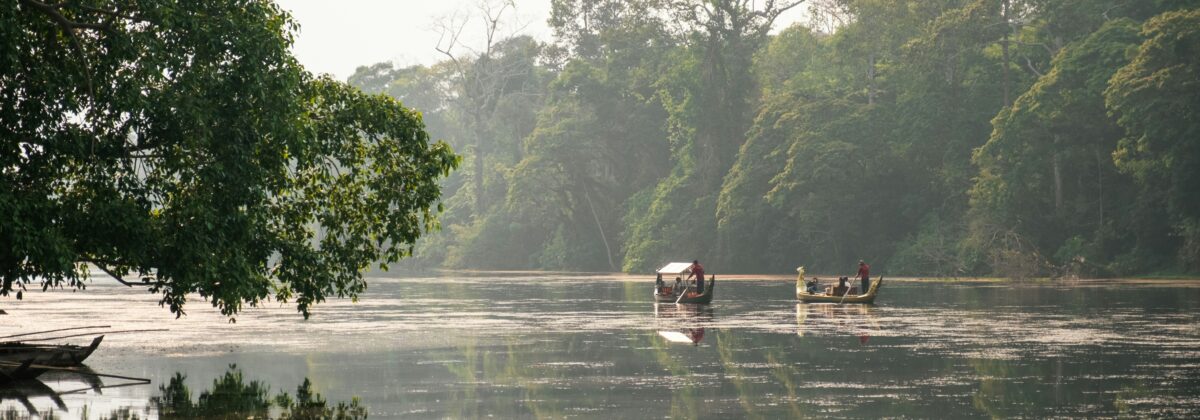
 Angkor’s Secrets and the Siem Pang Wilderness
 11 days
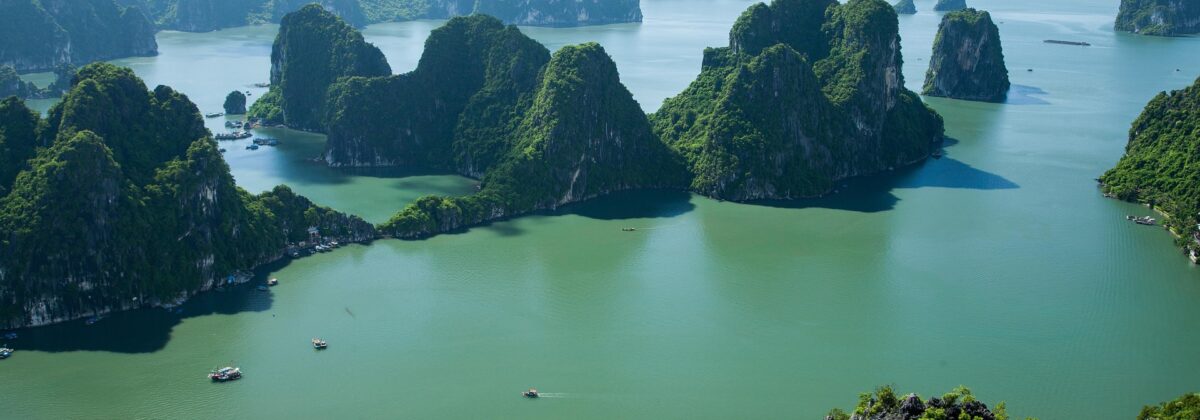
 Cambodia & Vietnam: The Essentials
Start planning your trip
Tell us your dates, your interests and the pace you enjoy, and we’ll shape a Cambodia journey around them.