
Laos Travel Guide
Laos moves at a gentler pace than much of Southeast Asia. Mountain landscapes, forested river valleys, Buddhist temples and rural communities shape a country where the journey between destinations can be as memorable as the places themselves.
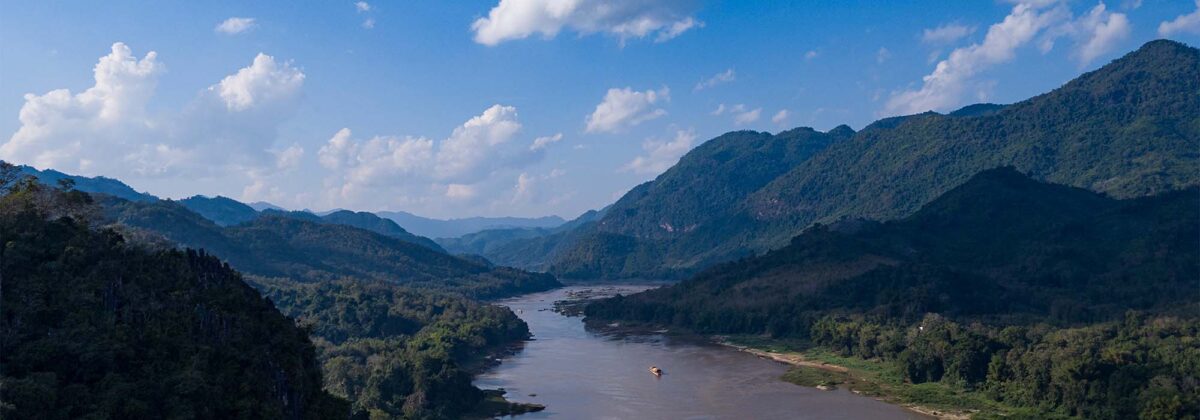
The Mekong runs through the heart of Laos, connecting historic towns and agricultural communities before widening around a network of river islands in the country’s far south. Beyond the river, the mountainous interior offers walking, cycling, wildlife experiences and opportunities to learn about its many ethnic cultures.
A journey through Laos can concentrate on Luang Prabang and the landscapes of the north, travel overland through the central provinces or follow the Mekong south towards Champasak and the river islands of Si Phan Don.
The Laos to China Railway has made travel between several northern destinations considerably easier, but it has not removed the need for thoughtful planning. Stations are often located outside town centres, tickets and passport details must be arranged correctly, and many of the country’s most rewarding places still require slower travel by road or river.
Why Visit Laos?
Laos offers a style of travel that feels naturally unhurried. Its principal destinations are comparatively small, its landscapes remain central to the experience, and encounters with local communities provide much of the country’s appeal.
Luang Prabang brings together gilded temples, traditional architecture, riverside scenery and a strong sense of living heritage. Beyond the town, waterfalls, villages and mountain landscapes provide opportunities for walking, cycling and travelling by boat.
Northern Laos is defined by dramatic limestone scenery, forested mountains and culturally diverse communities. In the south, the Bolaven Plateau, the temple of Wat Phou and the river islands of Si Phan Don reveal a different side of the country.
Laos is particularly rewarding when the itinerary allows time for river journeys, scenic overland travel and experiences outside the main towns. Food, crafts, religious traditions and village life all contribute to understanding a country whose culture remains closely connected to its landscapes.
When to Visit Laos
Laos has a tropical climate with a generally dry season and a wetter green season.
The period between November and February usually offers the most comfortable conditions. Temperatures are lower, humidity is reduced and the weather is well suited to walking, cycling, temple visits and overland exploration.
Mornings and evenings can be surprisingly cool in Luang Prabang and the mountainous north. Warm layers may be needed, particularly during river journeys and early departures.
March and April become progressively warmer, especially in the lowlands and southern provinces. Activities are best arranged for the cooler parts of the day.
Seasonal agricultural burning can affect air quality and visibility in northern Laos during parts of the late dry season. The timing and severity vary each year, but this should be considered by travellers with respiratory concerns or those visiting primarily for mountain scenery.
The green season normally runs from approximately May to October. Rainfall transforms the countryside, fills waterfalls and creates vivid rice-field landscapes. Showers are often heavy but relatively short, although rural roads and remote journeys may be affected.
River levels change throughout the year. Higher water can support certain boat journeys, while lower levels may alter routes, landing points and journey times. The best period therefore depends on the regions and experiences included.
How Long Should You Spend in Laos?
A shorter visit of four or five days can focus on Luang Prabang and its surrounding countryside.
With seven to ten days, visitors can combine Luang Prabang with Vientiane, Vang Vieng or the mountain landscapes of northern Laos. The railway makes several of these combinations considerably easier than they once were.
A journey of approximately two weeks allows for more in-depth exploration. This might involve travelling through northern communities, visiting the Plain of Jars or continuing south to the Bolaven Plateau, Champasak and the river islands of Si Phan Don.
Combining northern and southern Laos usually requires a flight or a substantial overland journey. Attempting to include both within a short visit can result in too much time spent in transit.
Longer overland routes require patience, but they reveal areas of Laos missed when travelling only between its main gateways.
Places to Visit in Laos
Luang Prabang
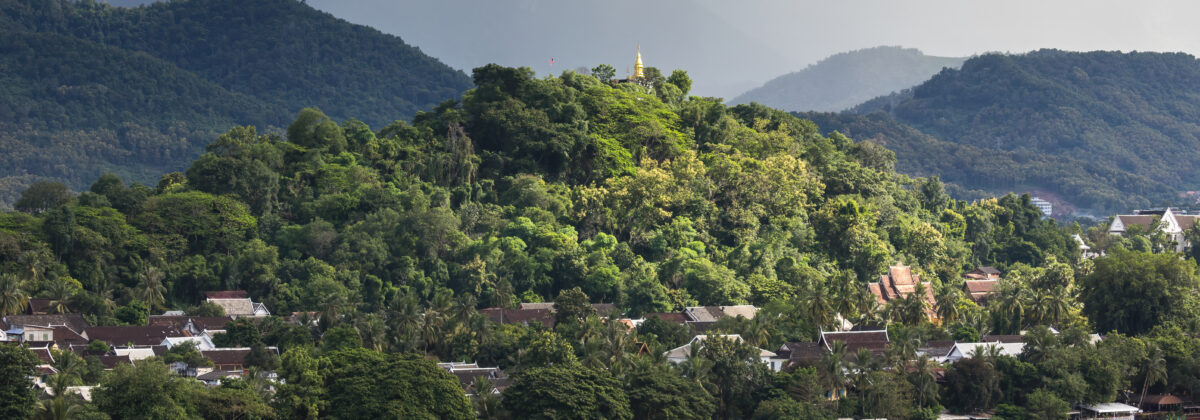
Luang Prabang occupies a beautiful position between the Mekong and Nam Khan rivers. Traditional Lao houses, colonial-era buildings and Buddhist temples create a town of exceptional architectural and cultural interest.
The historic centre is easily explored on foot or by bicycle. Experiences may include temple visits, local markets, regional food, traditional crafts and time beside the rivers.
The town is most atmospheric in the early morning and evening. Staying within or close to the historic peninsula provides convenient access, while properties outside the centre may offer greater space, river views or a quieter setting.
Three or four nights provides time to explore both the town and its surroundings without losing the relaxed pace that makes Luang Prabang so appealing.
Alms Giving
The early-morning alms-giving ceremony is a religious practice rather than a visitor attraction. Monks walk through the streets to receive food from local residents, continuing a tradition closely connected to daily Buddhist life.
Visitors should observe quietly from a respectful distance and avoid flash photography, blocking the monks or following them closely.
Participating requires appropriate preparation and behaviour. Buying unsuitable food from opportunistic street sellers and joining without understanding the practice can diminish the experience for both monks and residents.
A knowledgeable local guide can explain the ceremony and advise whether respectful observation or participation is more appropriate.
Kuang Si Waterfalls
Kuang Si is one of the most popular excursions from Luang Prabang. Its tiers of blue-green pools descend through a forested landscape outside the town.
The falls can become busy, particularly around the middle of the day. An earlier departure often creates a calmer experience and provides cooler conditions for walking.
Water colour and flow vary according to the season. Some pools may close temporarily because of water levels or local conditions.
The journey can be combined with carefully selected rural, craft or community experiences, but the day should not be overloaded with stops purely to fill the route.
The Mekong and Pak Ou
Boat journeys along the Mekong provide a different view of the landscapes surrounding Luang Prabang.
The Pak Ou Caves contain thousands of Buddha images and are a well-known destination upriver. The journey along the Mekong, however, is often as important as the caves themselves.
Boat quality, seating, engine noise and journey duration vary. A private boat allows greater flexibility and can create a more comfortable experience than joining a crowded departure.
Water levels affect boarding points and accessibility, especially during the lower-water months.
Vientiane
Laos’s capital is a low-rise city situated beside the Mekong River. Its temples, monuments, markets and surviving colonial-era architecture reflect the country’s religious, cultural and political history.
Important sites include the golden stupa of Pha That Luang, Wat Sisaket and the distinctive Patuxai monument. The city also has a growing collection of cafes, restaurants, galleries and social enterprises presenting contemporary Lao culture.
Vientiane is commonly used as an arrival or departure point, but one or two nights provides time to appreciate its understated character and riverside atmosphere.
The railway station is situated outside the central area, so sufficient time should be allowed for road transfers and station procedures.
Vang Vieng
Vang Vieng is surrounded by limestone mountains, caves, rivers and rice fields. It has developed into a broader nature and adventure destination with a growing range of comfortable accommodation.
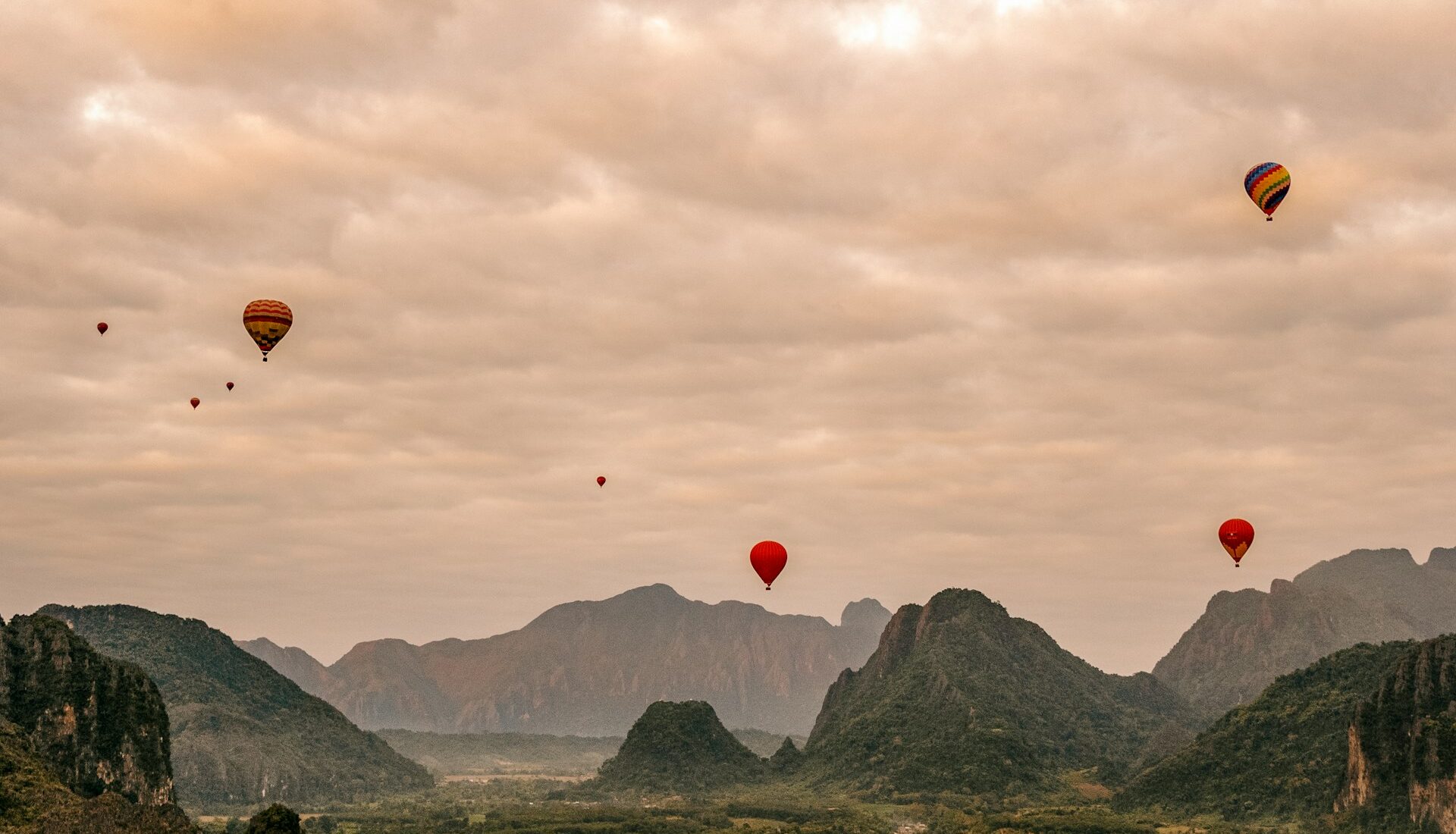
Activities include cycling, kayaking, walking, cave exploration and travelling into the surrounding countryside. Hot-air ballooning and elevated viewpoints provide wider perspectives across the karst landscape.
Some popular viewpoints involve steep, exposed climbs and should not be described as gentle walks. Heat, rain and slippery surfaces can make the ascent more demanding.
Balloon flights depend on weather and operating conditions. They should not be treated as guaranteed, particularly when visibility or wind is unsuitable.
The railway has made Vang Vieng easily accessible from both Vientiane and Luang Prabang. Two nights normally allows for a relaxed experience of the area.
Nong Khiaw and Muang Ngoi
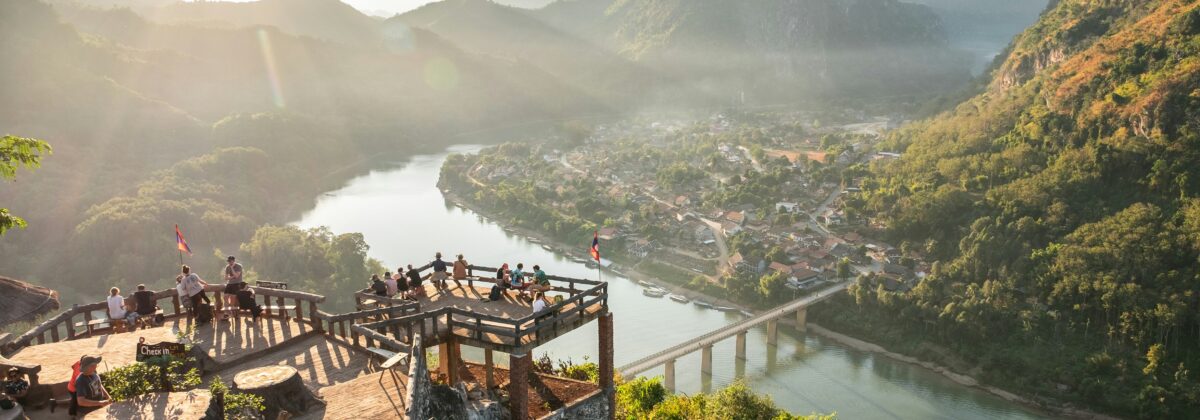
Nong Khiaw sits beside the Nam Ou River, surrounded by steep limestone peaks and forested mountains. The village provides a base for walking, cycling, kayaking and exploring communities throughout the surrounding valley.
Viewpoint walks rise steeply above the village and can be strenuous in hot or wet conditions. The difficulty should be chosen according to fitness rather than the promise of the highest panorama.
Farther upriver, Muang Ngoi has a quieter and more remote atmosphere. Boats connect the village with the wider Nam Ou region, while walking routes lead through fields and smaller communities.
Boat schedules and river conditions can change. Muang Ngoi therefore requires more careful planning than Nong Khiaw, particularly when connecting with a flight or train on the same day.
Two or three nights in the region allows time to enjoy the scenery and incorporate an active experience without rushing.
Muang Hiam and the Northeastern Forests
Muang Hiam provides access to the forests and communities of northeastern Laos, including the wider landscape surrounding Nam Et Phou Louey.
Community-based conservation experiences have been developed to support local livelihoods and wildlife protection. Programmes may involve forest travel, local accommodation and learning about conservation monitoring.
Wildlife sightings cannot be guaranteed. The value of the experience lies in the forest, the knowledge of local guides and understanding the relationship between nearby communities and the protected landscape.
Operating arrangements in remote conservation areas can change, so availability should be confirmed for the actual travel dates.
The region requires substantial road travel and works best within a longer northern journey linking Luang Prabang, Nong Khiaw and the northeastern provinces.
The Plain of Jars
The Plain of Jars is one of Southeast Asia’s most intriguing archaeological landscapes. Thousands of large stone vessels are scattered across sites throughout Xiangkhouang Province, some occupying hillsides and open grasslands with extensive views.
Their original purpose remains uncertain, although archaeological research has connected them to ancient burial practices.
The region also bears the marks of the extensive bombing Laos experienced during the 20th century. Museums and local organisations provide important insight into the continuing effects of unexploded ordnance.
Visitors must remain on marked paths at archaeological and rural sites. Unexploded ordnance remains a serious concern in parts of Laos, and independent wandering away from cleared routes is not appropriate.
Phonsavan is the principal base for visiting the jar sites. Two nights generally allows time to explore more than one location and understand both the ancient landscape and the province’s recent history.
Thakhek and Central Laos
Thakhek is a small Mekong town with a collection of historic buildings and a relaxed riverside centre. It provides access to the limestone landscapes, caves and rural communities of Khammouane Province.
The surrounding region includes underground rivers, karst formations and extensive cave systems. Kong Lor Cave is among the most remarkable, with boats travelling several kilometres through the mountain along an underground section of the Hinboun River.
Journey times in central Laos are substantial. Kong Lor should not be treated as a quick excursion from Thakhek without allowing for the road travel involved.
Boat access through the cave can be affected by water levels and local conditions. The experience involves darkness, uneven surfaces and boarding small boats, which should be considered by travellers with limited mobility.
Central Laos is particularly suited to travellers interested in overland exploration, landscapes and places beyond the principal routes.
The Bolaven Plateau
Rising above the southern lowlands, the Bolaven Plateau is known for its cooler climate, waterfalls, fertile farmland and coffee production.
Visits may include coffee plantations, farming communities and some of the country’s most impressive waterfalls. The region is home to several ethnic communities, each with its own traditions and cultural identity.
A visit to a plantation is most rewarding when it explains how coffee is grown, processed and traded rather than providing only a brief tasting.
The plateau is commonly explored from Pakse and can be incorporated into a wider southern Laos journey with Champasak and the Mekong river islands.
Some attractions can be seen on a day trip, but one or two nights allows a more complete experience and reduces the amount of repeated road travel.
Champasak and Wat Phou
The quiet riverside town of Champasak serves as the gateway to Wat Phou, an important Khmer temple complex positioned beneath Phou Kao mountain.
The site predates many of the monuments at Angkor and formed part of a wider cultural landscape connected to the Mekong. Its processional route, stone structures and hillside sanctuary create one of southern Laos’s most atmospheric historical experiences.
Reaching the upper sanctuary involves steps and an uphill walk. Visiting earlier in the day provides cooler conditions and generally softer light.
A knowledgeable guide can explain the relationship between the temple, the mountain and the wider Khmer world rather than presenting Wat Phou as a collection of isolated ruins.
Champasak’s traditional houses, river views and unhurried character make it an appealing place to stay for one or two nights.
The Four Thousand Islands
In the far south of Laos, the Mekong broadens around a network of river islands collectively known as Si Phan Don, or the Four Thousand Islands.
Don Khong is the largest island and provides a comfortable base for cycling, village visits and exploring the surrounding waterways. Farther south, Don Det and Don Khon have a more informal atmosphere and retain traces of the railway constructed during the French colonial period.
Waterfalls, river channels, agricultural landscapes and local communities shape the experience.
The river islands are connected by a combination of roads, bridges and local boats. Accommodation standards and atmosphere differ significantly between them, so the right base depends on the desired comfort and level of activity.
Two or three nights offers a relaxed conclusion to a journey through Laos or a natural connection with northern Cambodia.
Experiences in Laos
Buddhist Culture
Buddhist culture is central to the experience of Laos, from the temples of Luang Prabang and Vientiane to religious traditions that continue to shape daily life throughout the country.
Temple visits are most meaningful when the architecture, symbolism and role of the monastery within the community are explained.
Visitors should dress modestly, remove shoes where required and avoid touching religious objects or photographing people without permission.
Walking and Cycling
Walking and cycling provide access to rural communities, river valleys and agricultural landscapes around Luang Prabang, Nong Khiaw, Vang Vieng, the Bolaven Plateau and the Mekong river islands.
The difficulty of a route depends on heat, elevation and surface conditions as well as distance. Rural tracks can become muddy or inaccessible during the wet season.
Activities should be adapted to the traveller rather than using one fixed route for every age and fitness level.
River Travel
River travel can range from short local crossings to longer journeys along the Mekong and its tributaries.
A slow boat journey between northern Thailand and Luang Prabang can be a memorable way to enter Laos, particularly when broken with an overnight stay. It should be chosen for the experience of river travel rather than as the quickest means of reaching Luang Prabang.
Boat comfort varies widely. Seating, shade, bathroom facilities, noise and the number of passengers should all be considered.
Water levels and dam development have altered some historic river routes. Individual journeys should therefore be checked according to current operating conditions.
Communities and Crafts
Traditional crafts, local food and community visits offer opportunities to engage with Lao culture.
Textile weaving is particularly important in many regions, with patterns and techniques reflecting community identity. Workshops and social enterprises can help explain the skill, time and cultural meaning involved.
Community visits should be arranged through established local relationships. The aim should be genuine exchange and local benefit rather than photographing people or presenting daily life as a performance.
Nature and Conservation
Nature-focused journeys can incorporate waterfalls, caves, protected forests and mountain landscapes.
Wildlife encounters in Laos are often less predictable than conventional safari experiences. Responsible programmes should focus on habitat, conservation and local knowledge rather than promising sightings.
Caves and forests can involve basic facilities, uneven terrain and long road journeys. These details should be explained clearly before travel.
Suggested Ways to Explore Laos
Luang Prabang and the North
A shorter journey can concentrate on Luang Prabang and its surrounding countryside, perhaps adding Nong Khiaw for mountain scenery and gentle activity.
This creates a satisfying introduction without requiring domestic flights or a rapid sequence of hotel changes.
Luang Prabang, Vang Vieng and Vientiane
A classic northern route can connect Luang Prabang, Vang Vieng and Vientiane using the Laos to China Railway.
The train reduces journey times considerably, but stations are outside the town centres and security procedures require additional time. Transfers should be included when assessing the true length of the journey.
Remote Northern Laos
Additional time allows an overland journey into the northern mountains, northeastern forests or towards the Plain of Jars.
These routes involve longer drives and more variable accommodation, but they provide a deeper experience of the country’s landscapes and rural communities.
Southern Laos
Southern Laos can be explored from Pakse, combining the Bolaven Plateau, Champasak, Wat Phou and the river islands of Si Phan Don.
The route should be planned to avoid repeatedly returning to Pakse when an overnight stay on the plateau or in Champasak would create a more natural journey.
Northern and Southern Laos
A more comprehensive journey can connect northern and southern Laos by domestic flight, allowing the country’s temples, mountain landscapes, Mekong communities and southern river islands to be experienced within one itinerary.
At least two weeks is preferable. With less time, concentrating on one part of the country normally produces a better journey.
Planning Your Laos Journey
Laos is best planned around the amount of time available, the season and your appetite for slower road and river travel.
The railway is valuable for journeys between Vientiane, Vang Vieng and Luang Prabang, but private vehicles remain essential for remote regions. River journeys should be included where the experience justifies the time, rather than simply because the Mekong appears on the map.
Accommodation outside the principal towns may be relatively simple. In remote areas, the location, local character and access to the surrounding landscape can be more important than formal hotel facilities.
The suggested journeys on our website are intended as starting points rather than fixed packages. They can be adjusted around your dates, interests, preferred accommodation, activity level and the amount of guided or independent time you would like.
Essential Travel Information
Luang Prabang, Vientiane and Pakse are the principal gateways for international travellers. Flight schedules and international connections vary, so routes are normally planned around the most convenient available services.
The Laos to China Railway connects Vientiane, Vang Vieng, Luang Prabang and destinations farther north. Tickets are subject to availability and operational procedures, making advance planning important. Passport details must match the booking, and stations are often some distance from the town centre.
Road conditions and journey times have improved, but travelling through mountainous or rural areas can still take longer than the distance suggests. Boats may be incorporated along the Mekong, Nam Ou and other waterways depending on water levels and local conditions.
The local currency is the Lao kip. Cash remains important outside larger hotels and established businesses, while card acceptance and access to ATMs can be limited in remote areas.
English is spoken in the main tourism destinations, although less commonly in rural communities. Travelling with knowledgeable local guides provides cultural context and enables more meaningful communication.
Entry requirements depend on nationality and can change, so travellers should consult current official information before departure.
Explore our Laos journeys
Starting points rather than fixed packages — every one is shaped around your dates, interests and pace.
 8 days
 Essential Laos
 22 days
 Grand Tour of Laos
 10 days
 Into the Cloud Forest: A Laos Trekking Expedition
Start planning your trip
Tell us your dates, your interests and the pace you enjoy, and we’ll shape a Laos journey around them.